The EUROSTUDENT project delivers robust and policy-relevant cross-country comparisons of students' situations in higher education systems across Europe. It combines strong central coordination with an extensive network of national experts in each participating country, ensuring both methodological consistency and contextual knowledge. This structure enables a systematic assessment of national strengths and weaknesses in an international perspective.
All data collected are openly available through the EUROSTUDENT database, and micro data are available for research purposes in the form of scientific and campus use files. Comparative analyses produced by the consortium are published in open access and complemented by a wide range of national and thematic reports. Explore the publications database to discover insights on specific topics of interest. The EUROSTUDENT network has also launched a Working Paper Series designed to showcase early-stage research based on EUROSTUDENT survey data. Read more on the Working Paper Series.
Currently, the project is in its ninth round, which began in September 2024. The results will be published in spring 2027.
Who is this project for?
Due to its broad thematic coverage and the involvement of different stakeholder groups, EUROSTUDENT aims to benefit different target groups, either through direct involvement in the project, or by drawing on the publicly available data and results. The results primarily serve higher education policy-makers at national and European level, researchers, and students across Europe.
Policy-makers at European and national levels
EUROSTUDENT offers unparalleled comparative data and analyses on students in the EHEA, crucial for monitoring and analysing the evolving social dimension of higher education. EUROSTUDENT data and analyses can play an important role in the formulation and evaluation of social dimension strategies called for in the Principles and Guidelines to Strengthen the Social Dimension of Higher Education in the EHEA.
Researchers
Through participation, EUROSTUDENT national teams gain access to an expert network for exchanging expertise on survey methodologies and analysis. This is particularly beneficial for countries with limited experience in student surveys, where EUROSTUDENT plays a pivotal role in capacity building. For the broader research community, the project's data, published as a Scientific Use File, is an invaluable resource, fuelling comparative studies and country-specific research, and serving as a primary data source for academic theses and papers.
Students in the EHEA and the general public
Students themselves stand to benefit from EUROSTUDENT's findings, such as information on housing costs and other living conditions, aiding in their decision-making processes. The results also provide a rich data source for student research projects, including Bachelor theses. The general public is addressed through wider (social) media activities informing them about interesting results.
Go-to source of info on students
EUROSTUDENT strives to be the go-to source of expert information on higher education students in the European Higher Education Area. This means:
High-Quality Data: EUROSTUDENT data and analyses provide a reliable, valid, and comparable evidence base for policymaking and research. The methods employed are informed by the state of the art. Several levels of quality control ensure that data can be confidently used to understand the social dimension of higher education.
Comprehensive Country Coverage: EUROSTUDENT aims to include as many EHEA countries as possible, fostering an extensive, policy-relevant cross-country comparison. Our close collaboration with participant countries ensures data comparability and contextual relevance. This broad coverage enables a nuanced understanding of the social dimension of higher education across various national contexts.
Networking and Collaborative Dissemination: The EUROSTUDENT project creates and cultivates a network of researchers and stakeholders actively engaging with them to ensure that project outcomes go beyond consortium publications. We encourage the analysis and dissemination of project results by data users at both the national and European levels and publish a Working Paper Series to support this goal. A Steering Board composed of stakeholders provides feedback on the overall project outlook to ensure the relevance of the project output for research and policy.
European Partnerships:EUROSTUDENT collaborates closely with the European Higher Education Sector Observatory (EHESO) in order to provide relevant data to the initiative. Additionally, EUROSTUDENT actively participates in the Bologna Follow-Up Group (BFUG) Working Group on Monitoring and the TPG-D on the social dimension, contributing valuable insights to the development of the social dimension in the European Higher Education Area.
Open Data for Wider Accessibility: Committing to transparency and collaboration, EUROSTUDENT openly shares project data and results. Through accessible platforms and tools, we make our findings widely available, supporting the broader research, and policy-making community in leveraging this information for further studies and informed decision-making.
Members and Partners
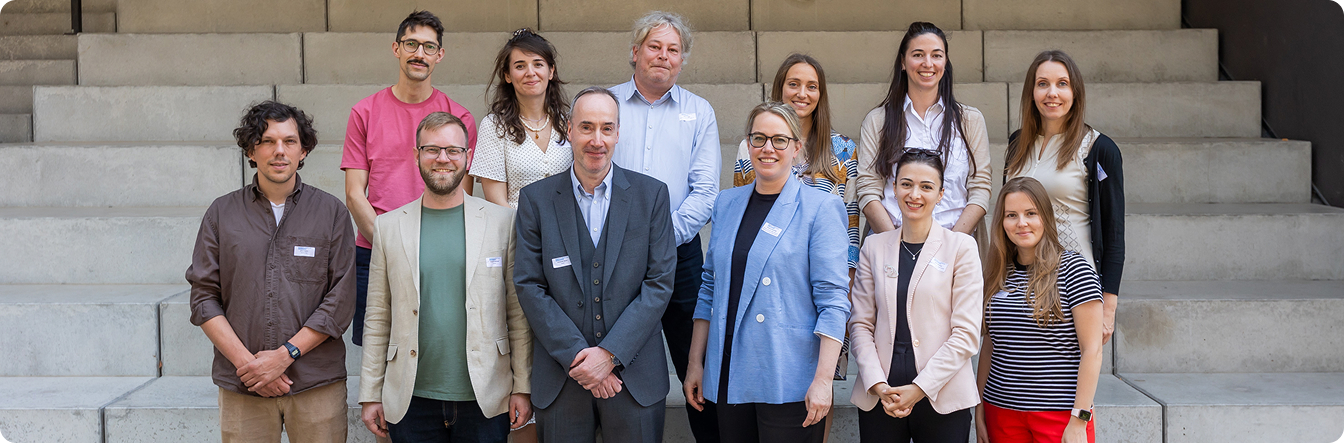
The EUROSTUDENT consortium works in close cooperation with national partners in each participant country. Through the involvement of ministry representatives as well as researchers, policy and research perspectives alike are represented. Typically, national ministries in the EUROSTUDENT project are the contractual partners of the project and, as such, responsible for the funding and execution of the national survey. The national research teams are chosen and funded by the participating national ministries. The national research teams are responsible for implementing a national student survey, delivering the data to the EUROSTUDENT consortium in accordance with EUROSTUDENT conventions, and providing national interpretations of the delivered data.
Central coordination and consortium
The central coordination team is made up of a consortium with seven member organisations; each of these partners is assigned specific tasks. The German Centre for Higher Education Research and Science Studies (DZHW) in Hanover, Germany, is responsible for the management of the consortium.
The Steering Board guides the EUROSTUDENT Consortium in its work. The Steering Board is composed of three representatives of participating countries and five stakeholders. The three representatives of the participating countries have been elected into the Steering Board by representatives of all participating countries for the entire life of the project.
The Steering Board has the following main roles and tasks:
Approval of annual report presented by DZHW
Approval of financial report and audit report
Discussion of quality development of the project
Strategic advice on the progress and on the future of the project
Settlement of disputes between consortium and participating countries
Members of the Board:
Mia Wallin Hansen, European Commission
Luka Lešić, European Students' Union, Belgium
Loredana Maravić, Bologna Follow Up Group, Croatia
Anna Wieser, Federal Ministry of Research, Technology and Space, Germany
Tuomas Parkkari, Ministry of Education and Culture, Finland
Odile Ferry, L’Observatoire national de la vie étudiante, France
Helga Posset, Federal Ministry of Women, Science and Research, Austria
Funding
The project is funded with the support of all participating countries, and co-funded by the Erasmus+ programme of the European Union and the following bodies.